Knee pain can gradually affect walking, climbing stairs, exercising, working and even simple daily activities. When medications, physiotherapy, injections and other non-surgical treatments no longer provide adequate relief, your orthopedic surgeon may discuss surgical options based on the condition of your knee.
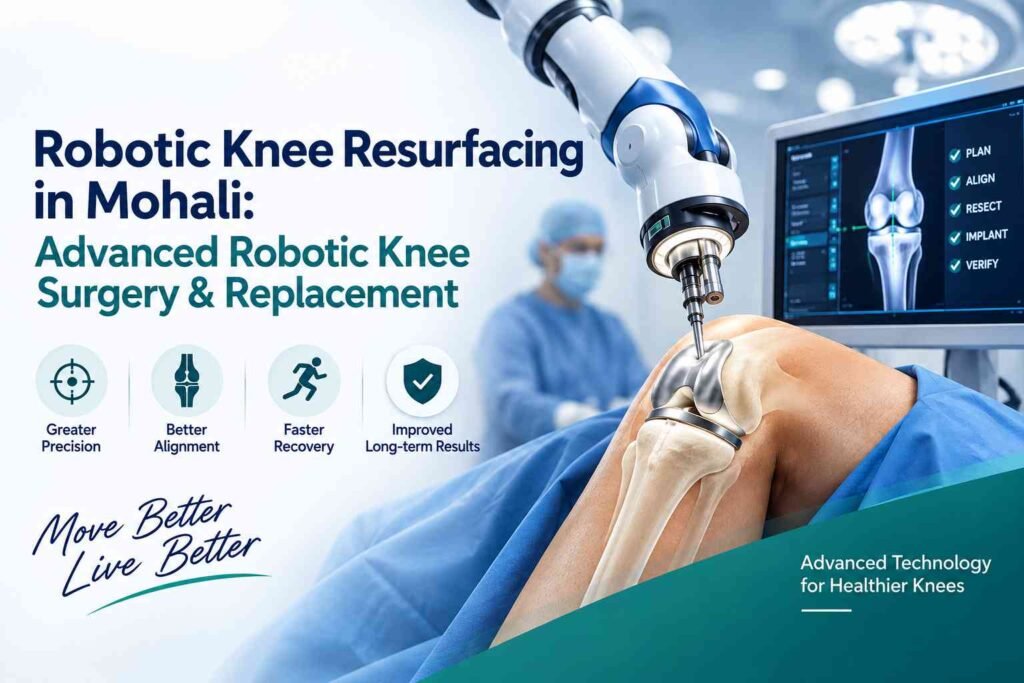
For suitable patients, robotic knee resurfacing in Mohali is an advanced approach that uses computer-assisted technology to help the orthopedic surgeon plan and perform knee surgery with greater precision.
Robotic-assisted technology may be used for different types of knee procedures, including selected partial and total knee replacement procedures. The appropriate treatment depends on factors such as the extent and location of joint damage, alignment, bone condition, activity level and overall health.
At RobotickneeResurfacing.in, patients can consult Dr. Gurdarshan Singh Natt for evaluation of knee pain, arthritis and joint replacement requirements in Mohali.
What Is Robotic Knee Resurfacing?
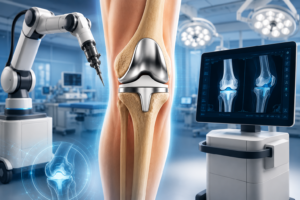
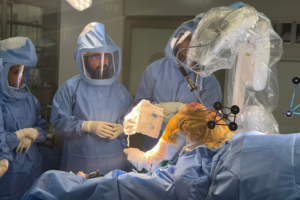
Robotic knee resurfacing is a robotic-assisted orthopedic procedure in which advanced technology helps the surgeon plan and execute the treatment of damaged portions of the knee.
The robotic system does not independently perform the operation. The orthopedic surgeon remains responsible for evaluating the patient, planning the procedure and controlling the surgical process.
Depending on the patient’s condition, the procedure may involve resurfacing or replacing damaged joint surfaces while preserving appropriate healthy structures.
This is important because not every patient with knee arthritis requires exactly the same type of surgery.
A proper clinical assessment is therefore essential before deciding between partial knee surgery, total knee replacement or another treatment.
Why Consider Robotic Knee Surgery in Mohali?
Modern robotic-assisted knee surgery is designed to provide the surgeon with technology that can assist with planning, alignment and positioning during the procedure.
Current orthopedic guidance indicates that robotic-assisted knee replacement can improve aspects such as surgical accuracy in some settings, although evidence has not established that robotic surgery provides superior short-term functional outcomes or fewer complications for every patient compared with conventional knee replacement.
Potential advantages of robotic-assisted surgery may include:
- Computer-assisted surgical planning
- More precise assessment of alignment
- Assistance with implant positioning
- Patient-specific surgical planning
- Ability to assess the knee during surgery
- Support for minimally invasive surgical approaches where appropriate
- Potentially more consistent execution of the planned surgical technique
The actual benefits vary according to the robotic system, surgical technique, patient’s condition and surgeon’s experience.
Choosing Robotic Knee Resurfacing in Mohali
Patients considering robotic knee resurfacing in Mohali should undergo a detailed orthopedic evaluation before deciding on surgery.
Knee replacement generally involves removing damaged joint surfaces and placing prosthetic components to restore the function of the knee. When damage is limited to one compartment, a partial knee replacement may sometimes be appropriate; when multiple areas are severely affected, a total knee replacement may be considered. Patients searching for robotic knee resurfacing in Mohali should first understand whether partial knee replacement, total knee replacement or another treatment is appropriate for their condition.
The decision is not based on age alone.
Your orthopedic surgeon may consider:
- Severity of knee arthritis
- Location of cartilage damage
- Knee alignment
- Ligament condition
- Bone quality
- Pain severity
- Difficulty performing daily activities
- Response to non-surgical treatment
- Overall medical condition
- Activity and mobility requirements
Who May Need Robotic Knee Resurfacing?
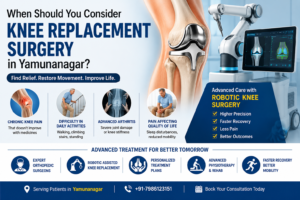
Robotic knee resurfacing or robotic-assisted knee replacement may be considered for selected patients experiencing persistent symptoms from conditions such as:
Knee Osteoarthritis
Osteoarthritis can progressively damage the cartilage covering the knee joint, causing pain, stiffness and reduced mobility.
Advanced Cartilage Damage
Significant cartilage loss can cause the bones to move against each other with reduced cushioning, resulting in pain and stiffness.
Persistent Knee Pain
Patients whose knee pain continues despite appropriate non-surgical treatment may require an orthopedic evaluation for surgical options.
Difficulty Walking
Pain and stiffness can make walking, climbing stairs and performing routine activities increasingly difficult.
Limited Response to Conservative Treatment
Treatment may initially include exercise, physiotherapy, medications, weight management where appropriate and injections. When these options do not provide sufficient relief, surgery may be discussed.
Advanced Knee Replacement in Mohali
Advanced knee replacement in Mohali combines modern surgical techniques with careful preoperative planning and structured postoperative rehabilitation.
The goal of knee replacement is not simply to replace a joint. The treatment aims to address pain and functional limitations caused by severe joint damage while restoring useful movement.
Robotic assistance can provide the surgeon with additional planning and intraoperative information. However, the technology is a tool used by the surgical team rather than a replacement for orthopedic expertise.
The AAOS notes that robotic-assisted knee replacement and conventional knee replacement have not shown significant differences in short-term function, outcomes or complications across the evidence reviewed in its guideline.
Therefore, choosing the appropriate procedure should be based on an individual clinical assessment rather than the technology alone.
Minimally Invasive Knee Replacement Mohali
Many patients searching for minimally invasive knee replacement in Mohali are interested in smaller incisions, reduced tissue disruption and faster recovery.
However, the term “minimally invasive” should not be interpreted as meaning that every patient will experience the same incision size, pain level or recovery time.
The surgical approach depends on:
- Type of knee replacement
- Patient anatomy
- Severity of arthritis
- Previous surgeries
- Bone and soft-tissue condition
- Surgeon’s technique
- Overall health
- Rehabilitation
A personalized surgical plan is therefore more important than simply choosing a procedure because it is described as minimally invasive.
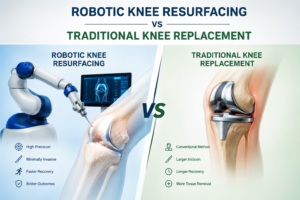
Robotic Knee Surgery vs Conventional Knee Replacement
One of the most common questions patients ask is:
“Is robotic knee surgery better than conventional knee replacement?“
The answer depends on the individual case.
Robotic systems can assist surgeons with planning and precision, and research has demonstrated improvements in certain technical measures such as alignment and reduction of positioning outliers in some studies. However, AAOS guidance reports that robotic-assisted total knee arthroplasty has not demonstrated a significant short-term difference in function, outcomes or complications compared with conventional surgery.
Therefore, patients should discuss:
- Whether robotic assistance is appropriate
- Which robotic platform is being used
- Why the surgeon recommends it
- Whether partial or total replacement is required
- Expected recovery
- Potential risks and complications
- Rehabilitation requirements
- Overall treatment cost
with their orthopedic surgeon.
Benefits of Robotic-Assisted Knee Surgery
Depending on the procedure and individual patient, robotic-assisted surgery may provide several technical advantages.
1. Detailed Surgical Planning
Advanced computer-assisted planning can help the surgical team evaluate the patient’s knee anatomy before and during surgery.
2. Assistance With Alignment
Robotic technology can assist the surgeon in achieving the planned alignment and positioning.
3. Patient-Specific Approach
The treatment plan can be adapted according to the patient’s anatomy and joint condition.
4. Assistance During Bone Preparation
Robotic systems can provide guidance during preparation of the damaged joint surfaces.
5. Controlled Surgical Execution
The technology can provide the surgeon with additional information during the procedure.
However, these advantages should not be interpreted as a guarantee of faster recovery, lower pain or better long-term results for every patient. Long-term outcomes continue to be evaluated as robotic technology develops.
How Is Robotic Knee Resurfacing Performed?
Although the exact process varies depending on the robotic platform and procedure, treatment generally involves several stages.
Step 1: Orthopedic Evaluation
The surgeon reviews your symptoms, medical history, physical examination and imaging.
Step 2: Understanding the Knee Damage
X-rays and other investigations may be used to determine the location and severity of joint damage.
Step 3: Surgical Planning
The surgical team develops an appropriate treatment plan based on the patient’s anatomy and the intended procedure.
Step 4: Robotic-Assisted Surgery
During surgery, the robotic technology assists the surgeon with planned bone preparation, alignment and positioning.
Step 5: Implant Placement
If knee replacement is required, appropriate prosthetic components are positioned according to the surgical plan.
Step 6: Rehabilitation
After surgery, the patient follows a rehabilitation program designed to restore movement, strength and functional mobility.
Early movement after knee replacement is generally encouraged because it can help reduce complications such as blood clots, with the exact rehabilitation program determined by the treating team.
Recovery After Robotic Knee Surgery
Recovery varies significantly from patient to patient.
Factors that can influence recovery include:
- Age
- General health
- Muscle strength
- Severity of arthritis
- Type of procedure
- Surgical technique
- Previous knee surgeries
- Commitment to rehabilitation
After surgery, your orthopedic team may recommend:
- Early controlled movement
- Physiotherapy
- Walking exercises
- Strengthening exercises
- Pain management
- Follow-up appointments
- Gradual return to daily activities
Patients should follow their surgeon’s individual rehabilitation instructions rather than comparing their recovery timeline with another patient.
When Should You See a Knee Replacement Surgeon in Mohali?
You should consider an orthopedic consultation if knee pain is interfering with normal activities or continues despite appropriate conservative treatment.
Common warning signs include:
- Persistent knee pain
- Knee stiffness
- Difficulty walking
- Pain while climbing stairs
- Reduced range of motion
- Swelling
- Difficulty standing for long periods
- Pain that affects sleep
- Difficulty performing routine activities
- Increasing dependence on pain medication
Not every patient with these symptoms requires knee replacement.
A knee replacement surgeon in Mohali can evaluate the underlying problem and determine whether non-surgical treatment, injections, physiotherapy, partial knee surgery or total knee replacement is appropriate.
How to Choose a Knee Replacement Specialist in Mohali?
Choosing a knee replacement specialist in Mohali should involve more than searching for a procedure name.
Patients should consider:
Orthopedic Qualification
Check the surgeon’s orthopedic training and qualifications.
Joint Replacement Experience
Ask about experience with knee replacement and the specific procedure being considered.
Robotic Surgery Experience
If robotic surgery is recommended, ask about the surgeon’s experience with the relevant robotic system.
Hospital Facilities
Consider whether the procedure is performed in a properly equipped hospital with appropriate surgical, anesthesia and rehabilitation support.
Individual Treatment Plan
A good consultation should focus on your specific knee condition rather than recommending the same treatment to every patient.
Rehabilitation Support
Recovery after knee surgery involves rehabilitation, so ask about the postoperative physiotherapy and follow-up plan.
Robotic Knee Surgeon in Mohali
If you are searching for a robotic knee surgeon in Mohali, the most important step is to undergo a detailed orthopedic evaluation before deciding on surgery.
At RobotickneeResurfacing.in, Dr. Gurdarshan Singh Natt provides orthopedic and joint replacement consultation in Mohali, including evaluation for robotic knee replacement and knee resurfacing procedures. The practice website identifies him as an orthopedic and joint replacement specialist and lists robotic knee resurfacing among his areas of expertise.
Patients from Mohali, Chandigarh and surrounding areas can discuss their symptoms, diagnostic reports and treatment options during consultation.
Robotic Knee Resurfacing in Mohali for Different Knee Conditions
The appropriate procedure depends on the location and extent of knee damage.
Partial Knee Replacement
If arthritis is limited to one compartment of the knee, partial knee replacement may be considered in appropriately selected patients.
Total Knee Replacement
When arthritis affects multiple compartments and causes significant pain and functional limitations, total knee replacement may be considered.
Knee Resurfacing
Knee resurfacing procedures focus on treating damaged joint surfaces, with the exact technique depending on the patient’s condition and surgical plan.
Non-Surgical Treatment
Some patients may not require surgery at all. Physiotherapy, exercise, medication, injections and lifestyle modifications may be considered depending on the diagnosis.
Why Proper Diagnosis Matters Before Knee Replacement
Two patients can have similar knee pain but completely different underlying problems.
For example, knee pain may be related to:
- Osteoarthritis
- Meniscus problems
- Ligament injury
- Cartilage damage
- Inflammation
- Previous injury
- Alignment problems
- Other orthopedic conditions
This is why an orthopedic evaluation should come before deciding on robotic knee surgery in Mohali.
The objective should be to identify the actual cause of pain and select an appropriate treatment—not simply to choose the newest technology.
Frequently Asked Questions
1. What is robotic knee resurfacing in Mohali?
Robotic knee resurfacing is a robotic-assisted orthopedic procedure in which computer technology helps the surgeon plan and perform treatment of damaged knee joint surfaces. The exact procedure depends on the patient’s knee condition.
2. Is robotic knee replacement better than traditional knee replacement?
Robotic systems can assist with surgical planning and precision, but current AAOS evidence does not establish a significant short-term functional or complication advantage for robotic-assisted total knee replacement over conventional surgery in every patient.
3. Who is a candidate for robotic knee surgery?
Patients with significant knee arthritis or joint damage may be evaluated for robotic-assisted surgery. Suitability depends on the extent of damage, anatomy, overall health and the type of procedure required.
4. Is robotic knee surgery minimally invasive?
Some robotic-assisted procedures can be performed using minimally invasive approaches, but the exact surgical approach depends on the patient and procedure. Robotic assistance itself does not automatically mean that every operation will use the same incision or technique.
5. How long does recovery take after robotic knee replacement?
Recovery varies from patient to patient. Rehabilitation, muscle strength, general health, surgical procedure and adherence to physiotherapy can all influence recovery.
6. Can partial knee replacement be performed using robotic assistance?
Yes. Robotic assistance can be used for selected partial knee replacement procedures. Whether partial replacement is suitable depends on which parts of the knee are damaged and the condition of the remaining joint structures.
7. When should I see a knee replacement surgeon in Mohali?
Consider an orthopedic consultation when persistent knee pain, stiffness or reduced mobility starts affecting your daily activities, especially when non-surgical treatment is no longer providing adequate relief.
8. How do I find a knee replacement specialist in Mohali?
Look for an appropriately qualified orthopedic surgeon with relevant joint replacement experience, access to suitable hospital facilities and a clear evaluation and rehabilitation plan.
Conclusion
For patients considering robotic knee resurfacing in Mohali, a personalized consultation can help determine the most appropriate treatment based on the extent of knee damage and individual health requirements.
However, robotic technology is only one part of successful knee treatment. The most important factors include an accurate diagnosis, appropriate patient selection, experienced orthopedic care, suitable surgical planning and structured rehabilitation.
If persistent knee pain is affecting your walking, daily activities or quality of life, an orthopedic consultation can help determine whether you may benefit from conservative treatment, injections, partial knee replacement, total knee replacement or a robotic-assisted procedure. Looking for robotic knee resurfacing in Mohali? Consult an experienced orthopedic and joint replacement specialist to understand which treatment is appropriate for your knee condition.